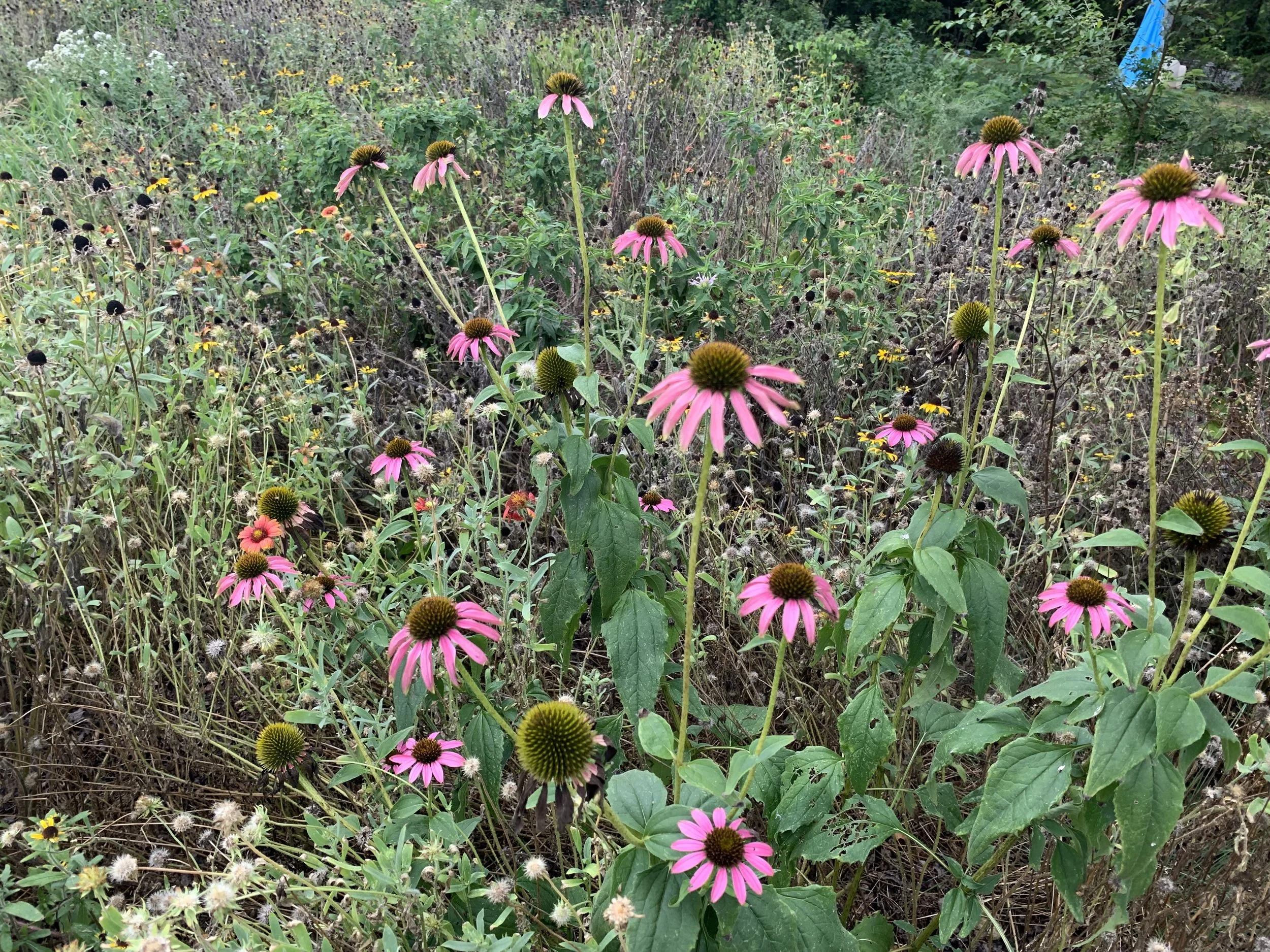
Native Wildflowers of Georgia
There are many wildflowers in Georgia and the greater Piedmont area. Wildflowers play a key role in the Piedmont ecosystem because they are the main food source for many kinds of pollinators. Native wildflower prairies are one of the most spectacular sights to see in Georgia due to the variety of species and color.
Georgia’s native wildflowers offer rich seasonal color and habitat value, including iconic species such as purple coneflower (Echinacea purpurea), black-eyed Susan (Rudbeckia hirta), butterfly weed (Asclepias tuberosa), cardinal flower (Lobelia cardinalis), swamp milkweed (Asclepias incarnata), wild columbine (Aquilegia canadensis), Georgia aster (Symphyotrichum georgianum), foamflower (Tiarella cordifolia), trillium (Trillium spp.), Indian blanket (Gaillardia pulchella), coreopsis (Coreopsis major and C. tinctoria), wild senna (Senna marilandica), lanceleaf tickseed (Coreopsis lanceolata), spiderwort (Tradescantia ohiensis), and goldenrod (Solidago spp.); these species support pollinators, are adapted to Georgia’s varied habitats from coastal plains to piedmont and mountains, and are excellent choices for restoration plantings, meadows, and pollinator gardens when matched to appropriate site moisture and light conditions.
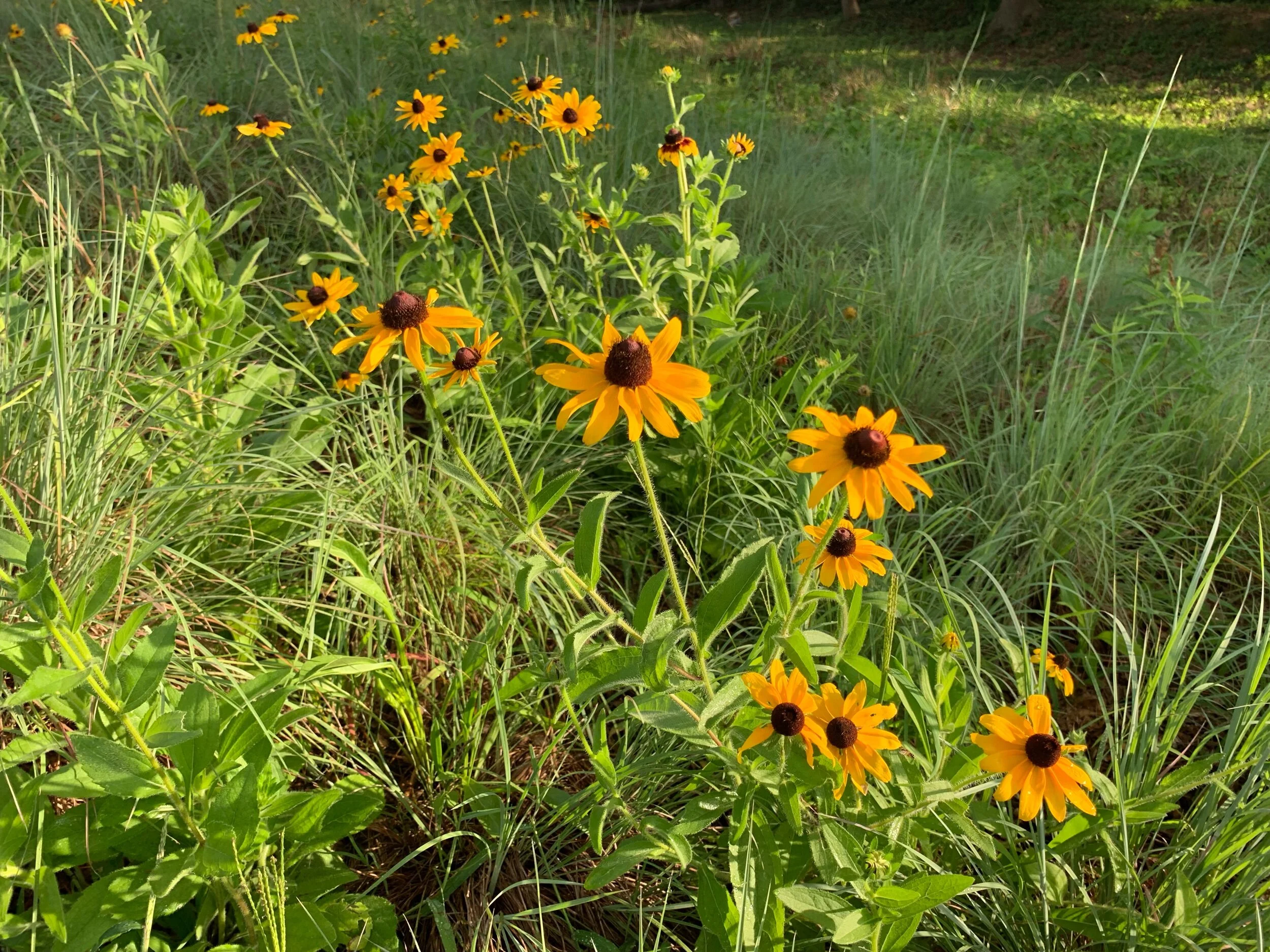
Coreopsis
How to Plant a Micro prarrie
Prepare the site
Remove all invasive plants from the area you wish to plant your perennial wildflower garden. Remove aggressive weeds from surrounding areas also. You may manually remove all unwanted species but large area may require tilling and or chemical treatment. Better germination rates occur if you aerate or loosen hard packed soils before spreading wildflower seed. It is recommended adding a layer of compost to existing soil to increase nutrients.
Seed and Plant Selection
Decide on what type of wildflower you want and plan on seeding in the winter to early spring. Wildflower seed that hasn’t been cold stratified should be sown early enough in winter so that it may germinate properly. Most species need 20-30 days of wet/cold (34-41*) so timing is important using this strategy. Wildflower seed planned to be sown in the late winter or early spring should be cold stratified. This can be easily done with a mixture of damp sand and your chosen wildflower seed in a container to put in the fridge for approximately 30 days. Spreading wildflower can be done by hand or a spreader depending on the size and terrain.